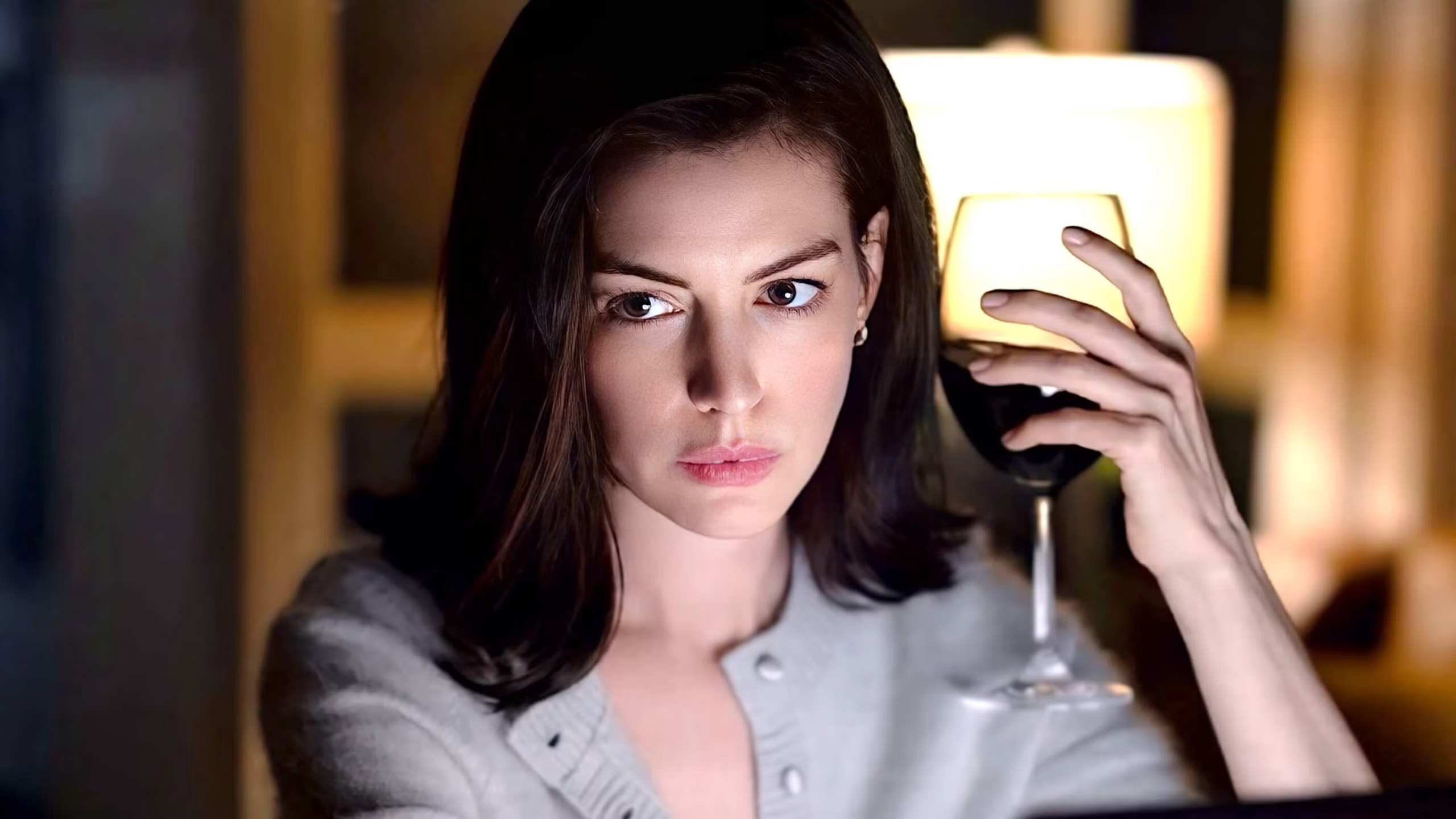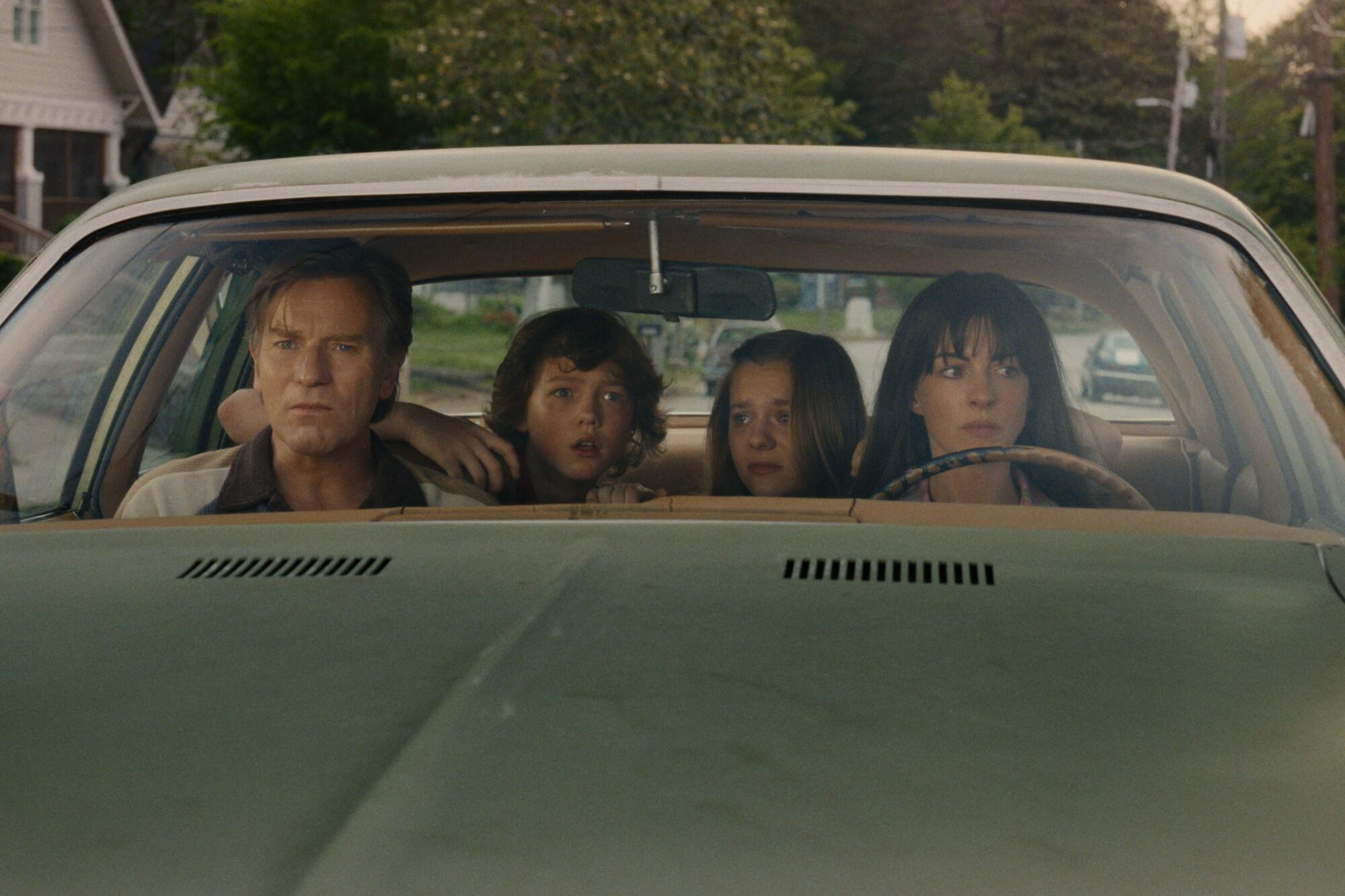
David Robert Mitchell’s survival thriller The End of Oak Street—starring Anne Hathaway and Ewan McGregor—takes a classic suburban setting and drops it straight into an adult Jurassic Park meets Jumanji. While the plot revolves around a neighborhood suddenly transported millions of years into the past into a prehistoric landscape, the true heart of the film lies in its psychological exploration of human relationships under extreme isolation.
At its core, the film functions as a sharp, unsparing look at the difficulties of marriage. Before any external crisis strikes, Denise (Hathaway) and Greg (McGregor) are already navigating quiet resentment, unsaid secrets, and growing distance. The existing cracks in their relationship aren’t magically healed by terror; instead, the unrelenting threat outside forces every buried conflict, secret, and dynamic out into the open.
Once basic infrastructure collapses, the feeling of confinement closely mirror the psychological weight of modern Covid quarantine and forced domestic isolation, turning once-safe homes into pressure cookers. The uncertainty and constant proximity to danger break down the characters’ mental guards, triggering psychological warfare between neighbours and family members as trust deteriorates.
The Verdict
By anchoring high-concept sci-fi within an intimate portrait of domestic tension, The End of Oak Street turns a wild survival scenario into a psychologically intense reflection on marriage and human resilience under isolation. 7.5/10