Before Trump, #MeToo and #TimesUp, women were fighting back against instititutionalised sexism. And yet, the scandal at Fox News that brought down CEO Roger Ailes was not so long ago.
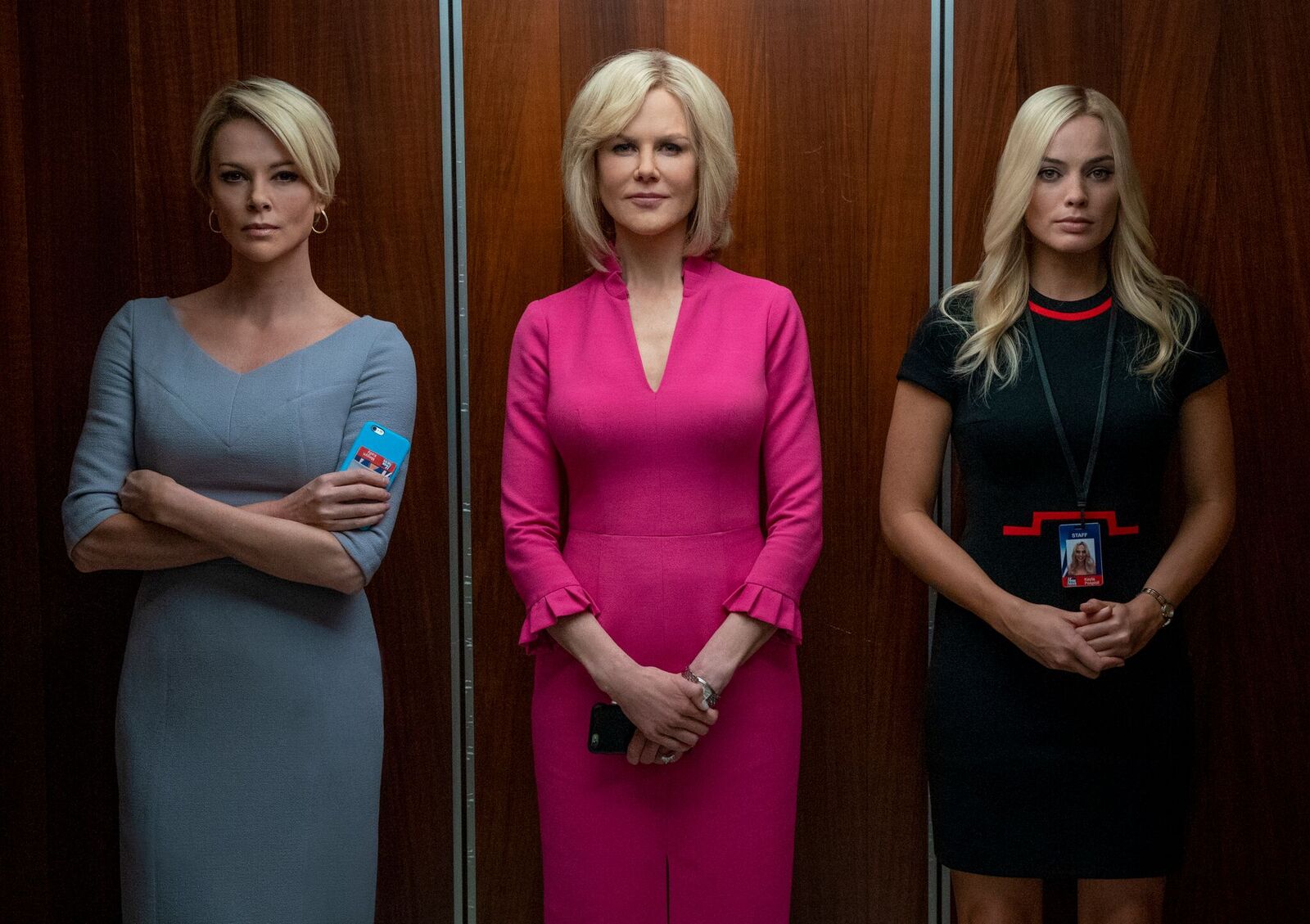
Director Jay Roach takes the glamour from his Austin Powers movies and dips it with the political sauce of television credits such as Game Change and All the Way. The Big Short‘s Charles Randolph is also on board as a writer, with similar exposition scenes fast cut with quips about who’s who in the Fox News jungle. We’re set it up with Charlize Theron’s character Megyn Kelly (based on the real life news anchor) as she gives the grand tour of the office. Every corner has a direct phone line and cameras watch every move. The Murdochs take up occupancy on one of the floors. Female employees on camera wear short skirts, show off their legs and they’re predominantly blonde. The title of the film surely gives a nod to that aspect alone.
From the outset, Megyn Kelly asks the tough questions knowing full well who her conservative audience is. During a scene where she infamously asked Trump about his attitudes towards women, she panics as the focus of the interview shifts to her. Known as the establishment with a capital ‘E’, she is the primetime spot and has the ambition to match. Initially, she retains a cordial relationship with Ailes (John Lithgow), as he acts as her mentor in the battlefield that is cable TV. “Nobody stops watching because of a conflict, they stop watching when there isn’t one,” he reassures her. Brash and unreserved, he’s ostensibly dismissed by many in the office as being predatory because of his unrelenting demeanour.
Gretchen Carlson (Nicole Kidman) is a fellow Fox veteran, on the opposite side of the career trajectory. We’re shown a montage of her enduring sexist remarks on air from her colleagues until she tires of laughing it off. Bumped off and relegated to a lulling afternoon timeslot, she prepares a list of remarks with comments such as “man-hating” and “sexy but too much work.” She prepares a case with her lawyers to sue Ailes personally, although they doubt the availability of witnesses who will willingly testify. She’s perceived to be tired, losing her touch and even vindictive. It’s no surprise when she’s inevitably dismissed without an explanation, but the ousting plays into her hand.
Plucky Kayla Pospisil (Margot Robbie) isn’t actually a real employee, but her character is a composite of real women at the network. She poises herself to be in the radar of Ailes, confidently approaching him in his office as she lays out her grand dream of being on television. She soon learns that the price of her potent promotion is loyalty, and that all those meetings behind closed doors are not without a pound of literal flesh. As she’s harassed by Ailes, her naive optimism morphs into a shaking, disturbed realisation of the rules of advancing and the consequences of speaking out. Robbie’s portrayal is palpable, and her non-verbal, facial expressions are often sublime.
Above all, the women affected do not want to be seen as victims, but the silence of their colleagues and the mounting pressure to downplay the scandal push them to risk jeopardising their careers or forever regret their compliance in Ailes’s actions. The three women are the lens for the story, and their looks and glamour appeal make them likeable and enjoyable to watch. However, we’re not given perspective outside of their eyes, and the combined star power of Theron, Kidman and Robbie naturally makes you barrack for their team against the decrepit, overweight Ailes. Whether they can be construed as late stage feminists is contentious, as they benefited from a system that favoured their looks and enabled a platform for their conservative political views.
Still, there’s no love lost when it comes to the tone of the movie. It’s a powerful take on the impact of personal responsibility when reporting abuse, and what it means for the people that come after you. It’s a satisfying ending for an often and too well known predicament.
Verdict: 8/10.
Studio Canal Australia