Image: Roadshow
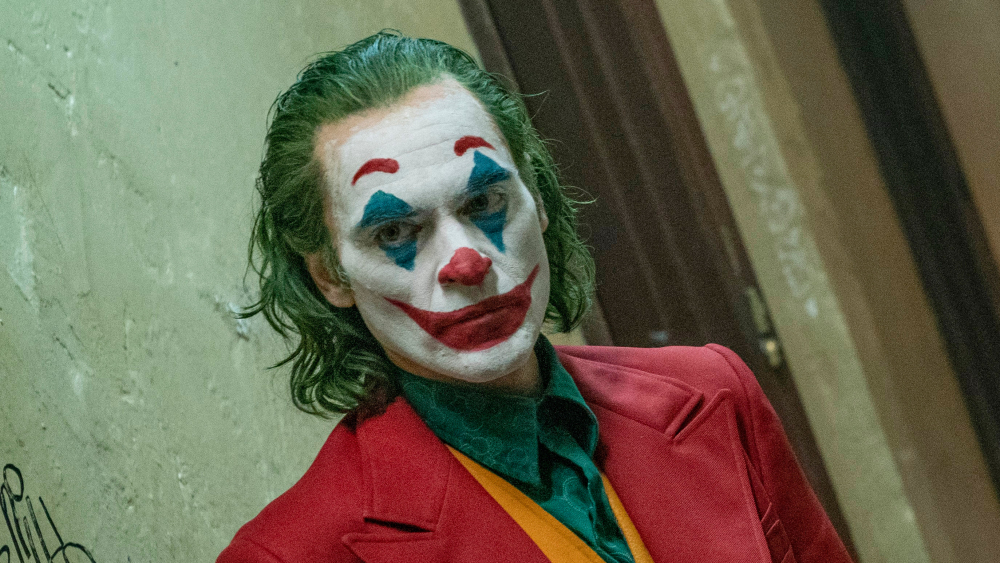
Following the dark demise of any villain is no easy feat, but when this story is so harrowed and so well oiled in the pop culture machine, you’d better hope there’s no room for scars. With Todd Phillips as director, you’d be forgiven for thinking that Joker was out for laughs given his filmography that boasts the comedies Old School, The Hangover and Borat. This is no comedy, and it’s certainly not campy à la Jared Leto in Suicide Squad. Faster than you can ask, ‘Why So Serious?’ there’s certainly moments of black comedy, but as the film dives in, the message gets murkier and more ominous.
Arthur Fleck is not particularly likeable, and he’s an uncomfortable guy to be around. Even the his fellow colleagues who are employed as clowns or circus freak style entertainment think he’s somewhat unhinged, as his nervous explosions of laughter and mismanaged quirks convey. A clown that’s unfunny, particularly to children, paints Arthur as tragic figure that’s invisible to the world. In a style and tone reminiscent of Taxi Driver and The Kings of Comedy, Arthur finds himself on the mean streets of Gotham that’s a picture perfect representation of New York in the late 70s come early 80s. Arthur’s apartment is shabby, his clothes are ill-fitted and he’s tasked as the primary carer to his sweet but delusional mother with a tenuous yet dramatic connection to the Wayne aristocracy. As tensions rise between the shrinking middle class and the elite rich, a pressure cooker series of events leads to Arthur to being trampled on one time too many, and he lashes out towards out his tormentors with that first kill. As he rises to become an accidental icon of the city, clown masks populate the news and protests reach a tipping point. Still, Arthur insists, “I’m not political.”
Joaquin Phoenix does not exude the charm and finesse of Heath Ledger’s Dark Knight, but he need not try. He’s not an anarchist trying to usurp the world order, rather, he’s inadvertently a nobody lusting after somebody to finally notice him. Enticed by notoriety, he glides across the room like a gaunt Val Kilmer doing a a Jim Morrison impersonation. His hair is long and greasy, and his ribcage protrudes from his body, but with every smoke of the cigarette he almost evolves into a rockstar musing over his next career move. In one brilliant yet haunting scene, he imagines himself on a talk show hosted by idol Murray Franklin (Robert De Niro, in a obvious nod to Scorsese films), laughing and bowing by himself in the living room. A blaring TV audience in the background sets the stage for a dangerous platform, but during this strange, comical vignette, he prepares himself for what will be a memorable performance.
There’s no getting around the question of violence; it’s as obvious as the punchline in some jokes. Joker flirts with a gun, and he romanticises giving the rich (or anyone who ever mocked him) what they deserve. An emaciated villain suddenly finds a reason to stand upright, and although violence should not be a crutch for the plot to lean upon, it provides a structure for the character’s twisted descent. There’s a large distinction in Gotham between the powerful bureaucrats and the street rats struggling to get by, enabling to violence bridge the gap between the disenfranchised clown and his new sense of power. In one tense scene, he disappears into a crowd all donning clown masks as the police follow in hot pursuit. Given the recent warnings and unease close to the film’s release in America, there’s the uneasy feeling that if copycat filmgoers were to be inspired by his antics they too would avoid being identified and captured.
Joker isn’t for the faint-hearted, and it’s not light entertainment. Unlike his ill-fated character, Joaqin Phoenix should rightfully get the recognition he deserves.
Verdict: 8/10
Roadshow Australia