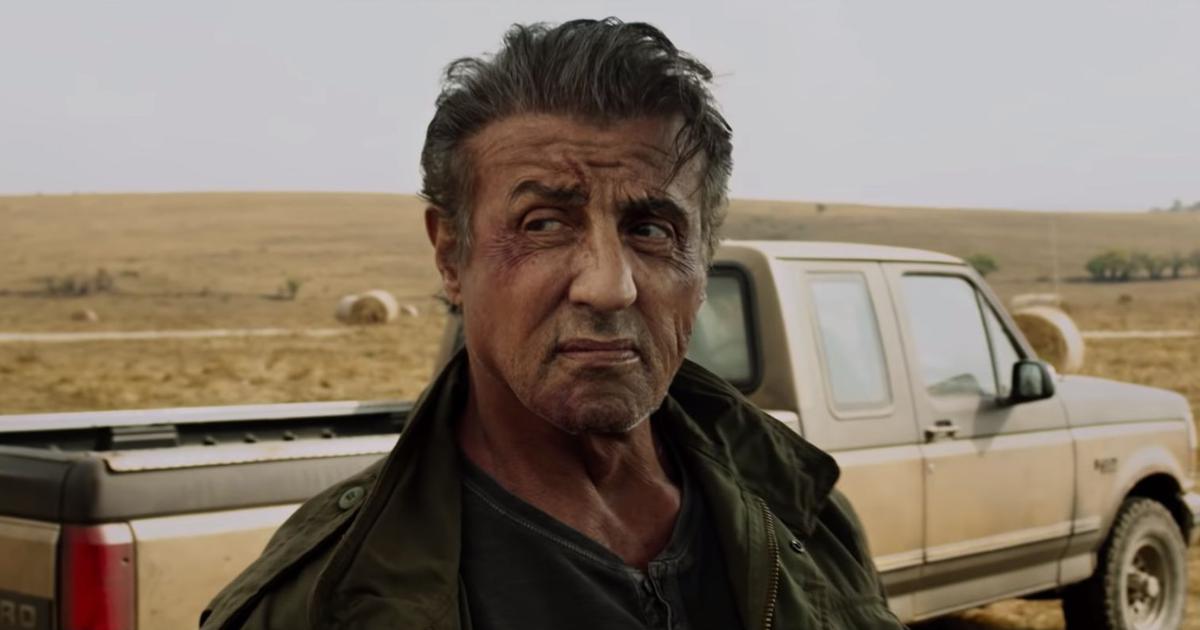
Sylvester Stallone has been around the action hero block a few times, in The Expendables, Rocky and in one of his famous franchises as the Vietnam Vet John Rambo. He’s got the tough guy persona who’s a bit of a softie at heart, maybe someone’s uncle who’s roughened by his days of conflict but deep down is a family man who wouldn’t hesitate to pull up the laces of his steel-capped boots and jump back into the fight. In his latest venture Rambo: Last Blood directed by Adrian Grunberg (Edge of Darkness), at the helm, as he ostensibily closes a film that began 37 years ago and spanned 4 prior missions in the jungle.
Last Blood sees Rambo in a different location; a ranch style farmhouse that resembles a desolate style Clint Eastwood Western. There’s even a barnyard and some mysterious underground tunnels that run deep under the house, as a hint to the plot later. He rides horses with niece Gabrielle (Yvette Monreal) and hurriedly reminds her in some rushed dialogue that the world is not as innocent as she is, and that she’s not really prepared for what’s out there. By this he means Mexico, where her estranged father is said to be living with his family, and she’s sternly reminded by her uncle and grandmother that crossing the border to see him is a bad idea. On the cusp of adulthood and making her own choices, and with the urging of a friend, she defies them anyway in an act that should not have evaded a war hero (who by this stage who should know every sneaky trick in the book).
Across the border there’s an illicit cartel trading in sex trafficking, as if the poorly lit halls and terrified girls standing outside of them indicate. The men running them have long, dark beards and beady eyes and they objectify women casually and without concern, until serious time passes and Rambo is on their tail. His determination to track down his niece sees him partner up with Carmen (Paz Vega) a reporter who is covering the drug trade in Mexico and missing a relative of her own. She assists him to an extent, and after all the tension of her following our hero in a bar to the entrance of the hideout, she patches him up after a fight only to never appear again. “Move on,” she urges him, and “deal with your grief,” but by this stage rage ensues and a violent rampage is on the way.
Soon enough, a Home Alone style ambush is in place. Those underground tunnels? Perfect trench warfare with enough explosions and spikes for guerilla warfare. It’s not enough that he storms the cartel headquarters and makes an example out of a few key players, including making heads roll as he speeds down the highway in a getaway pickup truck. He lures them back to his own, transformed residency and stockpiles enough weapons even as he is outnumbered. The violence becomes farcical, like a Tarantino movie where each baddie’s comeuppance is so absurd it’s laughable.
Fighting reluctantly yet with a patriotic virtriol was the key motivation for the veteran. Against his better judgement, he stepped in good faith to defend himself (First Blood) a soldier (First Blood Part 2), the Taliban (Rambo 3, albeit a contentious motivation) and as a peacekeeper in Burma in Rambo. The latest venture does not offer anything beyond a personal vengeance and a score to settle.
For a setting that features a porch and a rocking chair, there are better ways for our hero to retire.
Verdict: 6.5/10
Roadshow Australia