Straight up, the ending in the movie is different to the book!
Philippa: Yeah, it is different.
Did that have something to do with your audience, being young teens and adults, you wanted to make it more optimistic?
Philippa: It was..partly do to with length, partly do with delivering with the premise you’re setting up, the premise being that there’s this unstoppable force barrelling towards this climatic end. The way it works in the book, I guess is darker, absolutely much darker, but also I think, if you did that on film, it wouldn’t work the way that it works in the book because-and it’s not just about the fact that, okay this is pretty dark and is this going to put people off? Are they going to feel let down, there’s no grand feeling that they’ve succeeded, but then of course you find out they have succeeded after the fact, the end of the book feels more like a denouement than a climax. When we were looking at this and tracking that journey, what we realised was, there’s a lot of dark stuff in that film, that always bends towards the light. And, that’s what we wanted to do, what we wanted to be truthful to, literally, that you can take an audience through all these dark hours, but always, every step of the journey along, forces are rising up against and starting to build and fight against this inevitable, horrible catastrophe that’s gonna happen because of the will of one very, very dangerous man. So…that to me was the driving engine and that’s what you have to fulfil as a writer at the end. Another thing, we weren’t just aiming for that young adult audience, we doing something similar to the Lord of The Rings, where you can fall into it.
Is believability of the world a priority?
Philippa: remember the first time I saw Star Wars. You know, not that I’m saying this film is that, but to reach that level of believability [in] world building
To expand on world building, something I found fascinating about the movie was that it’s set all these years in the future, but it has this rustic, antiquated feel with bits and bots and trinkets -including a shattered iPhone- so how far can we go as a civilisation? Is there anything new under the sun?
Philippa: Do you know what’s really interesting? I read this really interesting book once, about a terrible storm that hit in America in the early 1900s called Isaac Storm- great book, and in it, the author writes about the fact that there was a period of scientific arrogance at the turn of the last century where they actually did- I think in Paris or somewhere- they had a conference of world scientists, who came to the conclusion that they had in fact, discovered everything, really. Basically, that was the premise. I loved that idea, and thought “gosh, that’s extraordinary, that we might actually believe that’s possible!” My answer to that would be, absolutely not. No, absolutely not. It is endless, it is boundless, what could happen. What’s interesting about [the film] is that we’re the ancients, us here living right now is what the people of Mortal Engines are literally digging up and finding remnants of. They keep finding these plastic iPhones, and them it just doesn’t make any sense that people could live their whole lives trying to experience it with these little screens, because they live on giant traction cities that move. Their life is movement, their life is flashing past them as these great cities roam across the landscape. So what’s interesting about that is digging up the past and trying to figure out what these things were, what they meant, because a lot of that knowledge has just been lost to the world, um, but in doing that it becomes, it becomes, it has this kind of punk vibe to it. I don’t think it’ steampunk, because to me steampunk means a kind of Victorian era, which in a sci fi way, went off in a completely different direction to our world to the way it is now, but the way it’s got that same found, undiscovered, op shop, punk feel, it’s got that energy as well. I think a lot of that comes from Christian [Rivers] directing it. He’s not afraid of that anarchic energy that you can feel under that great…especially once the city’s rolling, powering towards the great giant wall. I think…where we could go, I don’t even know. I don’t think we can even imagine AI and what that might mean.
Or augmented media!
Philippa: Exactly, exactly. We don’t even know the delivery systems of our kids, the way they’re gonna receive stories. One thing that’s not gonna change, is that…story. Story hasn’t changed in centuries, for millennia. People need to-want to-hear tales about other lives, that’s how you receive the world.
There are so many dichotomies, you spoke earlier of the darkness against the light. What about the traction versus the anti-traction? Do you think the slow paced cities compared to the frenetic, fast cities symbolise a more rationalised approach to governments?
Philippa: I think what it shows in the book is that, the world of “tractionism,” which is these huge cities, city states really- that roam around the wastelands of what’s left after the 60 minute war that wiped out most of humanity and was then rebuilt-they have a code of conduct. They have agreed to live by certain rules, and so giant cities can feed upon smaller traction towns, but there are rules about what happens to those people who have kind of agreed amongst themselves to a certain standard of ethics and things like that, but the truth is with an system of government there’s always a dark underbelly, and we haven’t really gotten into that so much with this film, which we would have loved to [have done].
Will there be a sequel?
Philippa: I tell you what, this story just keeps getting better and better! We end on the beginning of the possibility of a love story, and there is a love story but….
It’s in its infancy?
Philippa: And where it goes is insane. I hope we get to tell that.
You’ve worked previously with Fran Walsh and Peter [Jackson]. How involved are you in the trio?
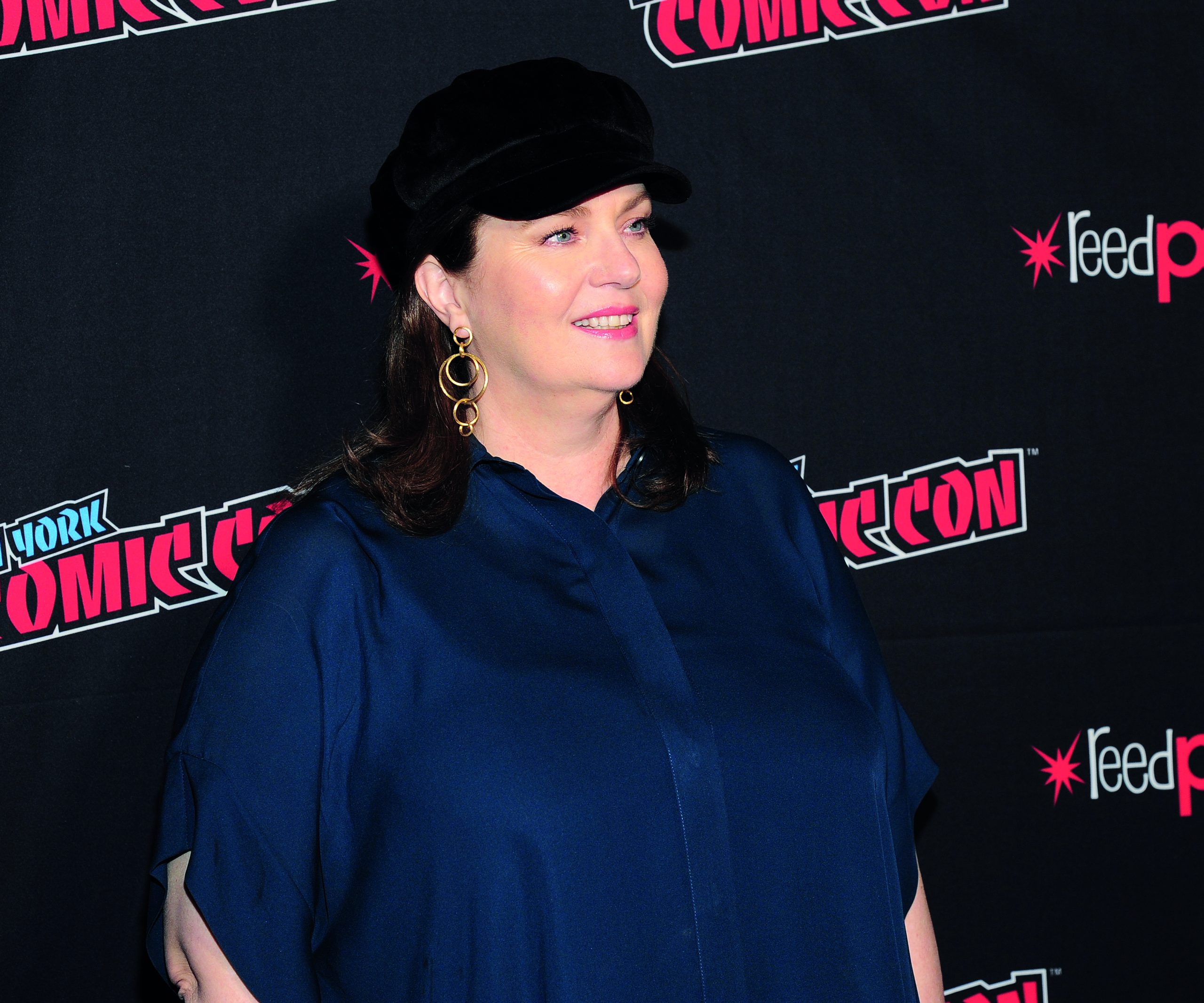
Philippa: A huge amount of this is Fran, I have to tell you. She had a very strong sense, because it really is a complex process, to try and take a book like that and make it into film, and I thought of the three of us, she had one of the strongest senses of how to do that. Absolutely, we’re all producers, not just screenwriters, and we’re involved with the casting and that creative process, but in the end, Peter chose not to direct this, even though it’s one of his favourite projects, and it’s something that he always thought he would direct. We chose to hand it over to Christian for the right reason…it does have this energy about it which is completely its own story.
Also filmed in New Zealand!
Philippa: It had to be filmed in New Zealand! We had a lot of fun talking about what city in New Zealand would win the battle. Laughs. It’s its own traction city.
RELATED: See what fellow Mortal Engines talent Leila George had to say!